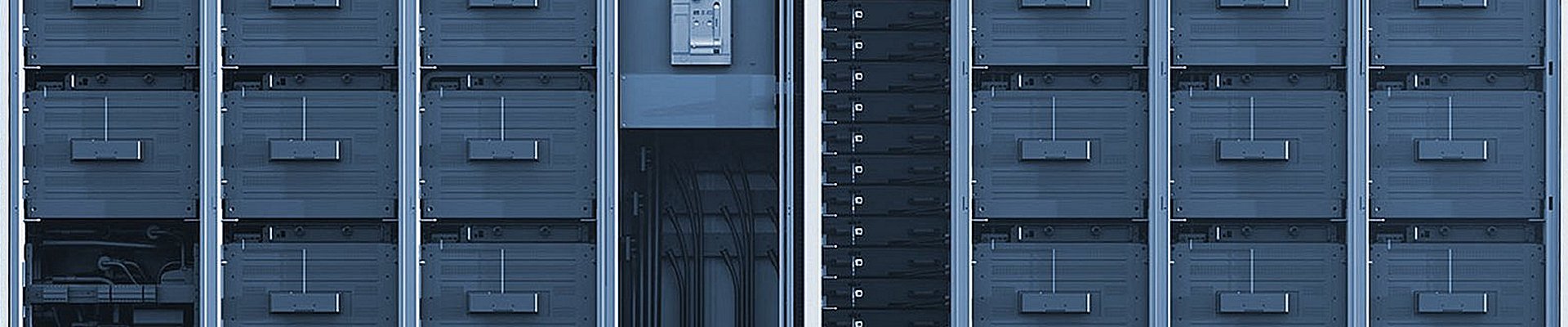
BESS Fire Propagation
BESS incidents are often discussed as “thermal runaway.” For compliance and safety engineering, two additional concepts are critical: fire propagation (how failure spreads through the system) and deflagration (rapid combustion of accumulated flammable gas). These hazards drive siting decisions, ventilation and exhaust design, gas detection strategies, and emergency response planning.
Fire propagation: what it is
Fire propagation is the spread of a failure event from a single initiating cell or module to adjacent cells/modules and potentially to adjacent cabinets or containers. Propagation risk depends on cell chemistry, module design, thermal barriers, venting paths, enclosure behavior, and system spacing.
- Intra-module propagation: cell-to-cell spread within a module.
- Inter-module propagation: spread across modules within a pack or cabinet.
- System propagation: spread between cabinets, racks, or containers.
Deflagration: what it is
Deflagration is rapid combustion of a flammable gas mixture. In BESS, this can occur when vented gases accumulate in an enclosure or room and then ignite. Deflagration is distinct from a “battery fire” because the hazard may be dominated by gas dynamics, pressure rise, and enclosure effects.
Deflagration risk increases when: flame or hot surfaces are present, gas is not adequately exhausted, and ignition sources exist in or near the enclosure.
Why these hazards matter for compliance
Fire propagation and deflagration are the technical mechanisms behind many code-driven mitigation requirements. AHJs care about consequence control: whether the installation can prevent escalation to adjacent exposures and whether it can avoid dangerous gas accumulation scenarios.
| Hazard | Primary consequence | Design levers | Compliance connection |
|---|---|---|---|
| Fire propagation | Escalation to larger fire and adjacent exposures | Thermal barriers, spacing, enclosure design, suppression strategy | Separation distances, HMA findings, emergency planning basis |
| Deflagration | Rapid pressure rise, explosion-like effects, structural damage | Ventilation/exhaust, gas detection, ignition control, vent panels | Indoor siting controls, ventilation requirements, AHJ conditions |
How UL 9540A fits
UL 9540A is a test method used to characterize fire propagation and gas release behavior for energy storage technologies under defined conditions. In many projects, UL 9540A results are used to support:
- Separation distance decisions and exposure analysis.
- Ventilation and exhaust design basis, especially for indoor installations.
- Gas detection placement and alarm logic assumptions.
- Emergency response planning inputs and scenario definitions.
A common failure mode is presenting UL 9540A data that does not match the deployed configuration or mitigation features. Test-to-install mapping should be explicit in the safety package.
Gas generation and accumulation: the critical pathway
In deflagration scenarios, the key chain is: gas generation, gas accumulation, ignition, and pressure rise. The most controllable link is usually accumulation, which is addressed through ventilation and exhaust design.
- Generation: venting events during failure release flammable gases and aerosols.
- Accumulation: gases collect if exhaust is inadequate or flow paths are blocked.
- Ignition: ignition sources can include electrical components, arcing, hot surfaces, or flames.
- Pressure rise: enclosure volume and venting options control overpressure outcomes.
Mitigation strategies
Mitigation is typically layered. For compliance defensibility, document which layer addresses which hazard.
| Mitigation area | Addresses | Examples | Typical evidence |
|---|---|---|---|
| Propagation resistance | Fire propagation | Module barriers, spacing, thermal insulation, compartmentalization | Design documents, product safety evidence, UL 9540A relevance mapping |
| Ventilation and exhaust | Deflagration and indoor hazards | Exhaust sizing, flow paths, forced ventilation, duct routing | Ventilation design basis and commissioning verification |
| Detection and control actions | Both | Gas detection, temperature sensing, alarms, automatic isolation/shutdown | Alarm/action matrix, commissioning tests, operational procedures |
| Separation and exposure control | Fire propagation | Setbacks, separation distances, fire barriers, protected corridors | Site plan, code basis memo, HMA conclusions |
| Emergency response planning | Both | ERP, incident scenarios, access control, responder coordination | ERP package, training records, drill plan |
Common gotchas in AHJ review
- Using generic ventilation language without a quantitative design basis.
- Assuming “containerized” means deflagration risk is automatically controlled.
- Not documenting how gas detection signals trigger actions.
- Missing test-to-install mapping for UL 9540A evidence.
- ERP that does not address gas accumulation and enclosure pressurization scenarios.
Practical preparation steps
| Step | What to do | Output |
|---|---|---|
| 1 | Define credible propagation and gas accumulation scenarios for the installation type | Scenario basis for HMA and ERP |
| 2 | Map UL 9540A evidence to the deployed product and mitigation design | Test-to-install mapping memo |
| 3 | Document ventilation/exhaust design assumptions and verification tests | Ventilation design basis and commissioning checklist |
| 4 | Define detection thresholds and action logic (alarm, isolate, shutdown, notify) | Alarm/action matrix and operating procedures |
| 5 | Align ERP with AHJ expectations and on-site access/security constraints | AHJ-ready ERP and drill plan |
Disclaimer. Informational guidance only. Not legal advice. Validate requirements against applicable codes, standards, listing documentation, and AHJ requirements.